

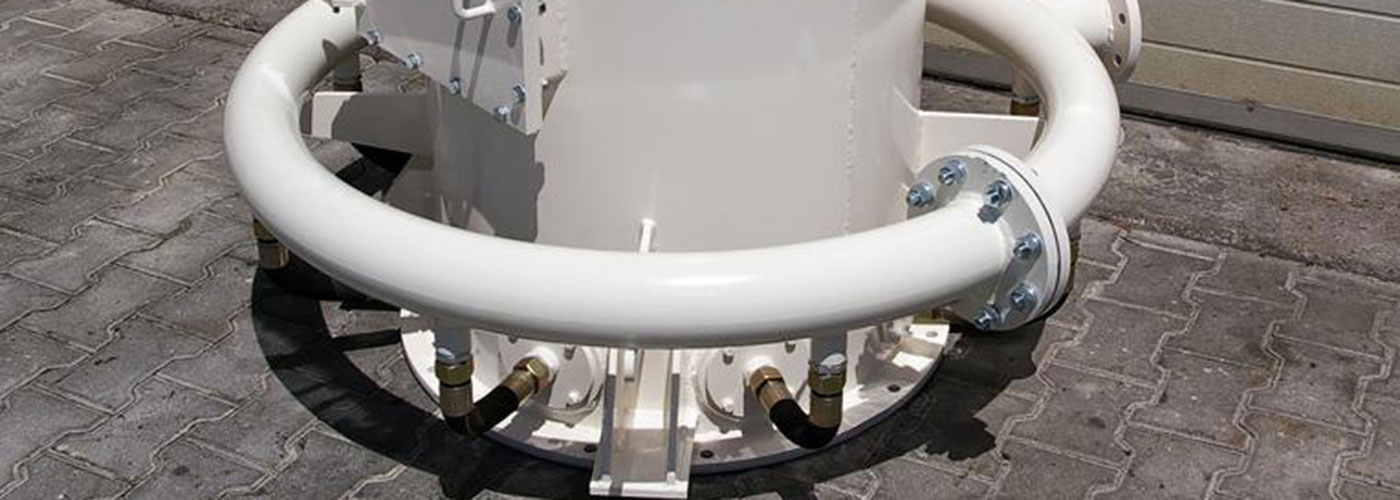
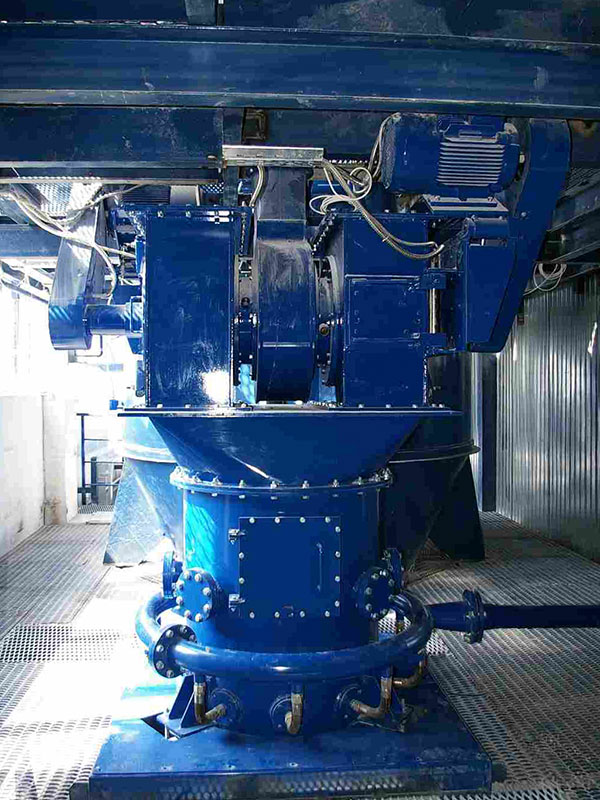
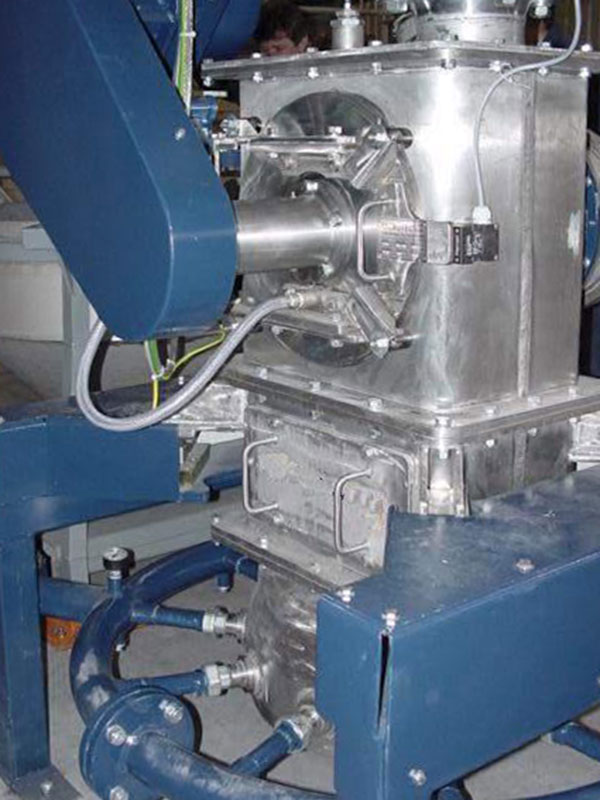
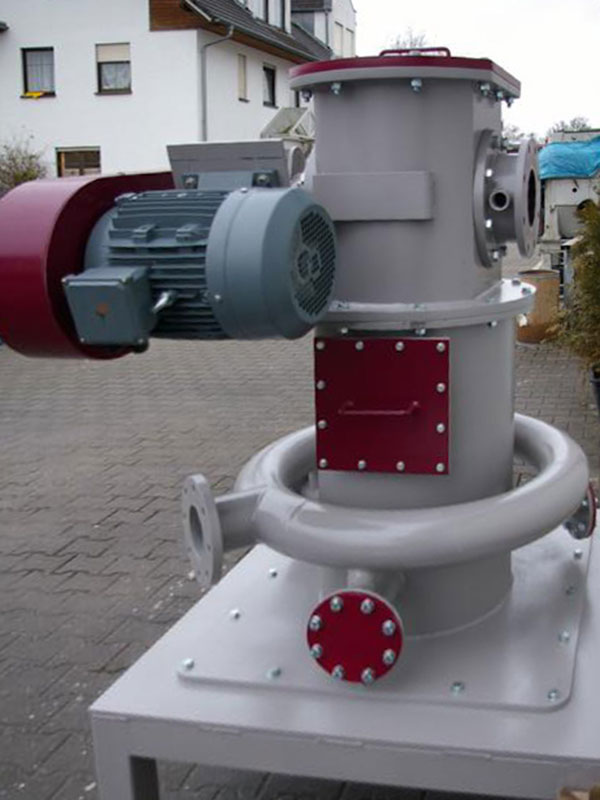
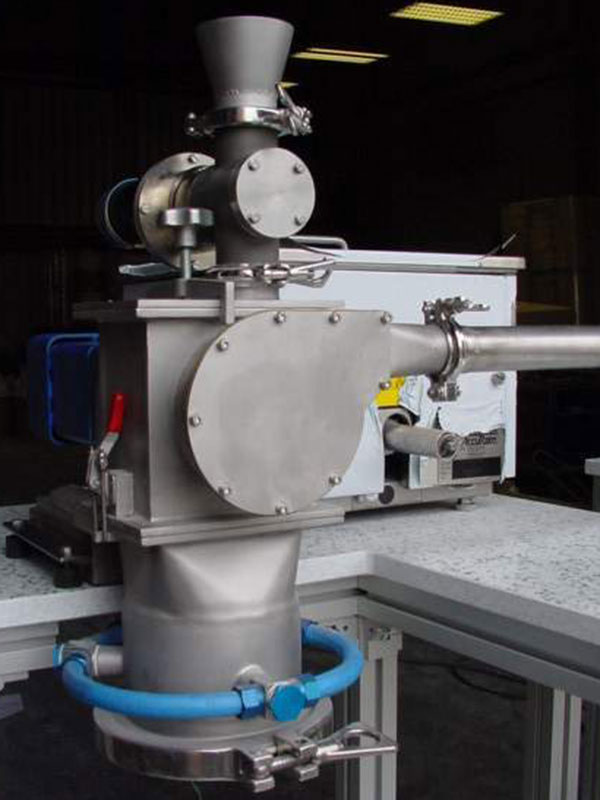
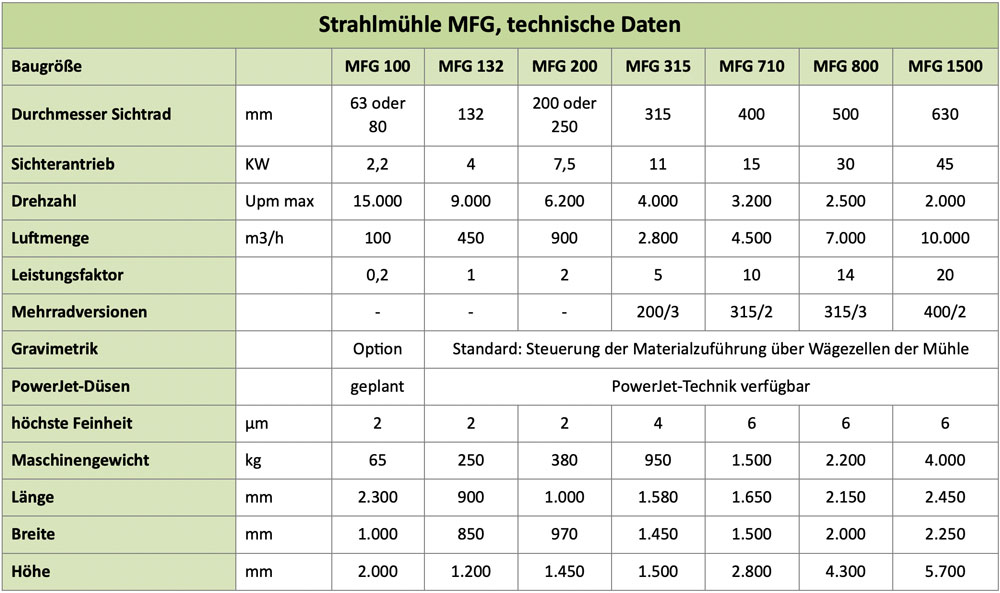
The MFG mill is available in various sizes. The table shows the available standard sizes; furthermore, additional sizes can be realized for customer-specific requirements.
From size MFG 200 upwards, the mills are optionally available with a multi-wheel air classifier head.
Additionally, a version for hot-air grinding is available. In this version, the air classifier wheel bearing is equipped with oil circulation lubrication including an external oil cooler.
For applications with the highest purity requirements, special versions for metal-contamination-free grinding are also available, featuring ceramic lining of the grinding chamber and air classifier wheels made of ceramic materials.
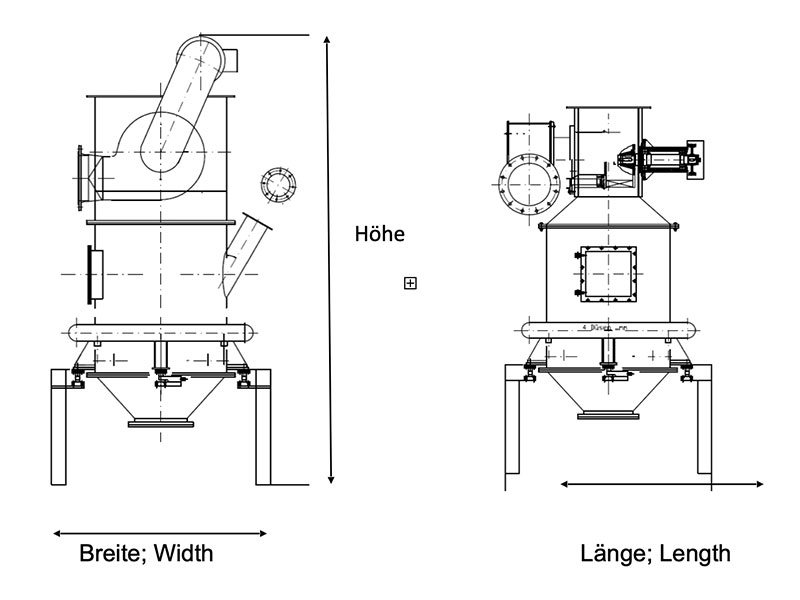
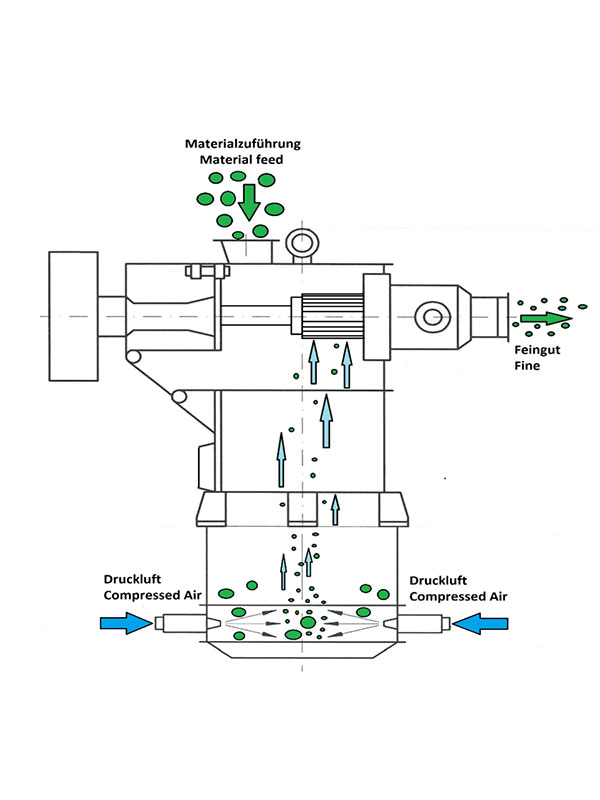
The material to be ground is fed into the fluidized bed jet mill from above via a double flap valve. In the mill base, the material is captured and accelerated by the air stream from the grinding nozzles. The particles collide with each other at high speed and are comminuted by the impact energy. The grinding is autogenous, without mechanical grinding tools – the particles grind themselves.
The comminuted particles are then conveyed upwards with the air stream to the rotating turbo air classifier wheel. There, the separation of coarse and fine material takes place: coarse particles are returned to the mill base and ground again, while the fine material leaves the process. The final particle fineness can be continuously adjusted via the speed of the air classifier wheel.
The fine material discharged from the system is continuously replaced by fresh material. The mill fill level, which is decisive for the grinding performance, is monitored and automatically controlled via precision load cells. The finished ground material is finally transported by the exhaust air stream to the filter and separated from the grinding air there.